

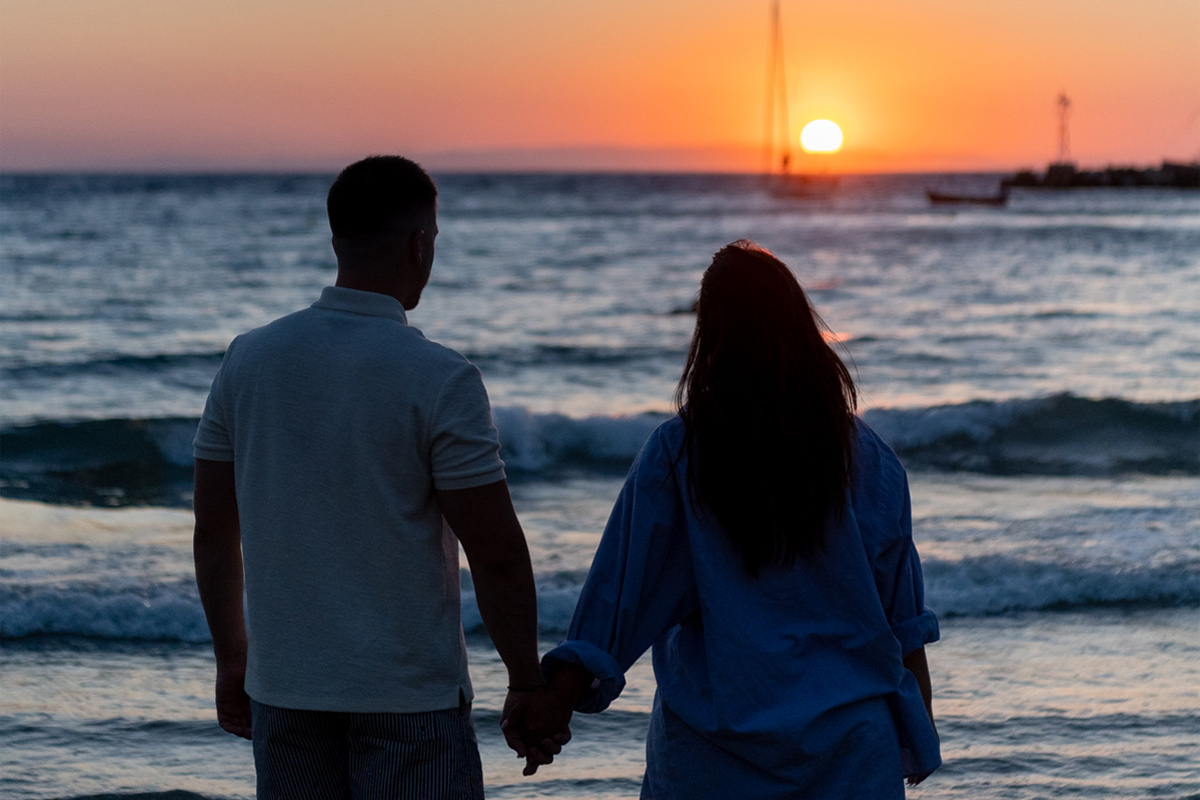
By the middle of September the sea off Syros has spent an entire summer gathering warmth, and it holds it. Twenty one and a half degrees through October. Nineteen into November. The water is at its most generous in precisely the weeks when the island is at its quietest.
Ermoupoli registers the change before any visitor does. The marble of Miaouli Square keeps the day’s heat long after the square has emptied, and at ten in the morning a table outside is simply available. Nobody reserved it. Nobody needed to.
These are the weeks the island keeps for itself. They are also, by some distance, the finest of the year.
The sea keeps its warmth long after the season has passed
October air settles between seventeen and twenty three degrees, which is the temperature at which a long lunch becomes possible again. By November it eases to fourteen and nineteen, and the sea follows a few weeks behind the air, as it always does.
The month carries two hundred and thirty five hours of sunshine against three hundred and seventy five in July. Less light, certainly, and light of a quality that July never achieves. It arrives at an angle, finds the ochre and rose of the facades along Vaporia, and makes the stone of the northern walls look older than it did in August.
Rain stays a rumour until late in the month. Thirty millimetres across roughly two days is the October average, according to the regional figures for the Cyclades. Autumn here is not a risk to be managed. It is a softer arrangement of the same summer.
Swimming does not end here in September. It thins. Through October the water asks nothing at all of the swimmer, and well into November a few residents keep a habit they have held for decades, at the same hour, from the same steps below Vaporia. Visitors who join them tend to remember it longer than anything else in the week.
The meltemi, which presses down on these islands from the north through July and August, loses its conviction in September. The practical consequence is a calmer sea and a boat that departs when you would like it to depart. Which weeks suit which traveller is a longer question, considered properly in the guide to the island’s seasons.
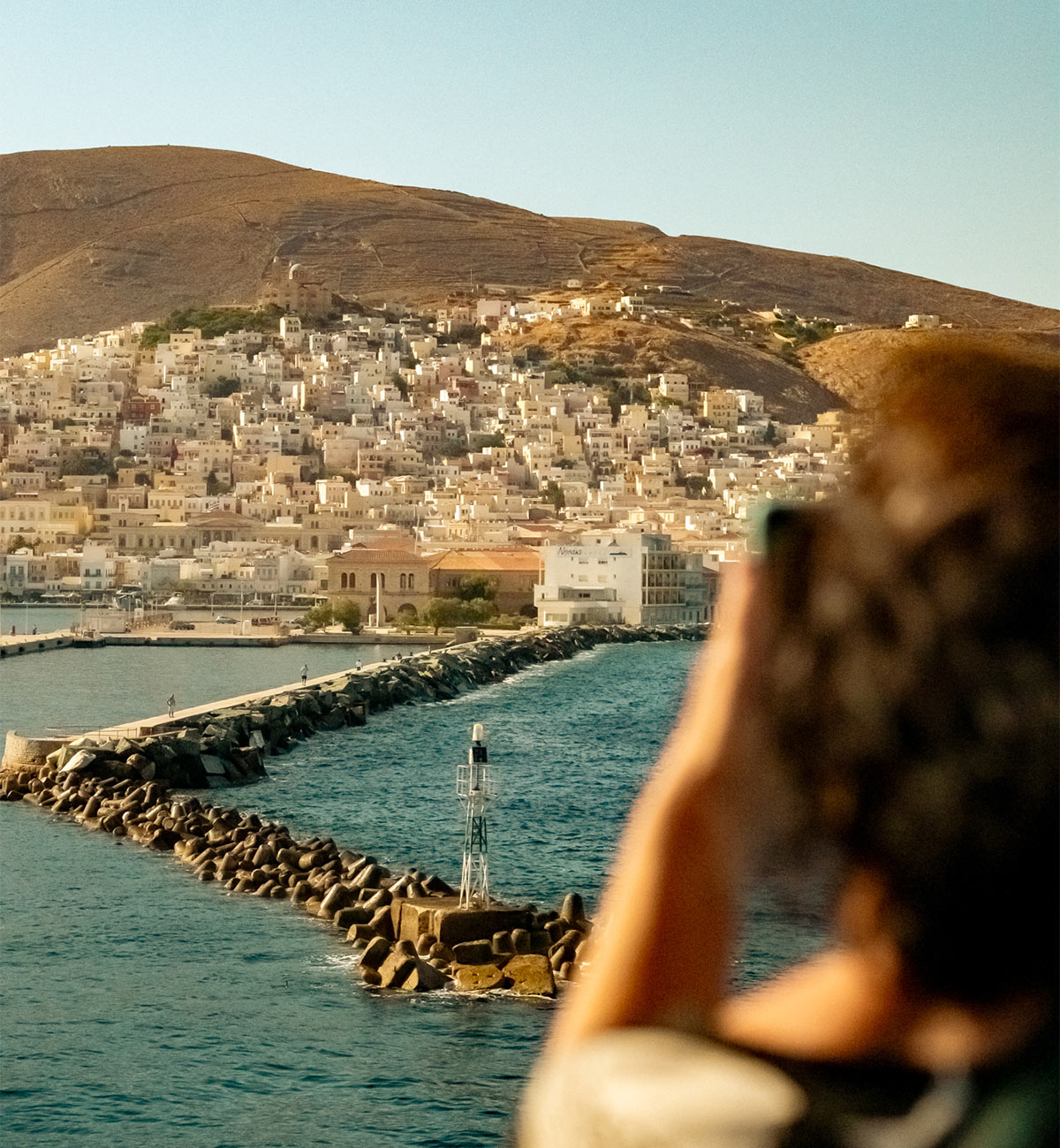
A town that was never built for a season
The crossing itself improves. In August the fast boat from Piraeus is a matter of allocated seats and a queue on the car deck. In early October the same vessel is unhurried, the outside deck stays usable for the whole passage, and the island rises off the bow with nobody standing in front of it. Arrival sets the tone of a week more than most travellers allow, and in these months it begins well.
Ermoupoli rose in the eighteen twenties as a merchant city and has behaved like one ever since. How that came about belongs elsewhere, in the account of the city itself. What matters in October is the consequence.
Twenty one thousand people live here through the year. They require bakeries, a fish market, a chemist, a tailor and somewhere to sit at eleven in the morning, and so those things remain precisely where they stood in August. The hours do not change. The faces at the tables do.
A few kitchens along the southern beaches draw their shutters once the first week of October has passed. Those that remain are, almost without exception, the ones that were always worth the drive, because they cook for people who live here rather than for a season. The island does not empty in autumn. It narrows to its best.
What follows from that narrowing is the part guests appreciate most. Houses that could not be had in August become quietly available, at an altogether different order of price. A table that required three weeks of notice now requires a telephone call. The island is not asking anything of you in these weeks, which is a rare and underrated form of hospitality.
Something else returns with the quiet. The bell from Ano Syros carries down the hill in the early evening. A shutter goes up at eight in the morning and the sound reaches the far side of the square. Below Vaporia the water meets the steps and withdraws, unhurried, all afternoon. None of it is remarkable, and all of it is the reason people who know the island choose October rather than July.
The island turns to its harvest
Autumn is when Syros eats best, and the reason is agricultural rather than culinary.
September belongs to the grape harvest. The small producers who spent August pouring wine spend September making it, and their work has its own account in the notes on the wineries. Then come the figs, and after them the quince. By November the first olives go to the press, and the new oil reaches the houses of the people who picked it before it reaches anywhere else.
The fishing improves as well, for an unromantic reason. Once the summer wind relents the boats go out on consecutive days, and a kitchen that can rely on its supply cooks differently from one that cannot. A calm week in late October will put better fish on a table at Kini than a brilliant fortnight in August.
The cheese keeps the same calendar. A wheel set aside in spring comes into itself after several months, so what reaches the table in October has been waiting since long before you chose your dates.
Dinner moves indoors by degrees, and the rooms it moves into are the better ones. Thick walls, a low ceiling, a kitchen no longer cooking for volume. October is the month the dining rooms of Ermoupoli stop being the second choice to a terrace and become the point of the evening.
None of this is arranged for anybody. The press runs because the olives are ready. The boats go out because the wind permits it. A guest in October has not been shown a harvest. They have arrived during one, which is a finer thing and cannot be staged.
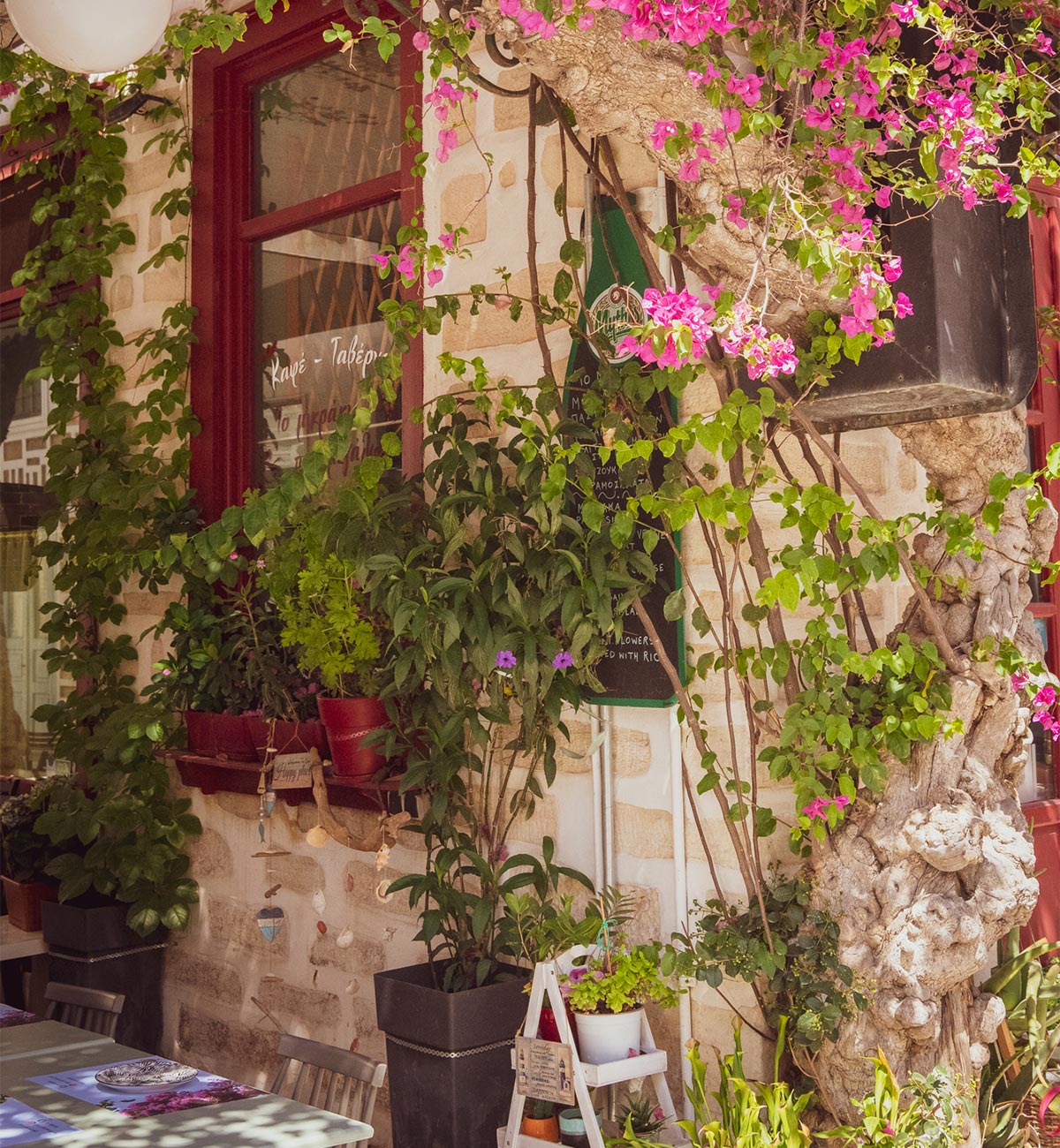
The traveller these weeks were made for
Syros in autumn asks a little of the traveller and returns a great deal. It is not the island of a crowded beach bar at six in the evening. That island exists here too, it exists in July, and anyone who wants it should have it then.
What these weeks offer instead is room. Couples who would rather eat for three hours than be seen. Architects and photographers, who come for the buildings and for a light that falls at an angle the summer never permits. Families able to travel outside the school terms. Guests who have already spent one August somewhere loud and have decided, quietly, against repeating it.
They tend to come back in June. A first visit in the quiet months shows the island as it actually is, and the traveller returns already knowing which bay belongs to them.
How a stay in these weeks is composed
High summer forgives a careless decision, because everything is open and something will do. Late September and October reward a considered one. Orientation decides whether a terrace is usable at lunch. One morning in any given week will be the calm one. Which table opens on which evening appears on no website at all.
That is our work, and in these months it is quieter rather than lighter. We know which kitchens keep a service through the autumn and which simply rest, which houses hold their warmth once the evenings turn, and when the northern coast will be worth the crossing.
Syros in autumn is not a reduced version of the summer. It is a different island, with a warmer sea, a better light, more room and a town entirely awake. For the traveller it suits, it is simply the better journey.
If these weeks sound like yours, write to us with your dates. A good deal of the season lies ahead, and the island is at its most generous in exactly these weeks.