

There is a specific sound that defines the end of the summer in the Cyclades. It isn’t the crashing of waves or the whistling of the north wind. It is the sound of the “clack-clack” of wooden shutters closing and the sudden, profound silence that follows the departure of the final large ferry in September. In Syros, this transition isn’t a mourning period; it is a homecoming.
While other islands might feel like ghost towns when the tourists vanish, Syros simply exhales. This is the moment when the island belongs to itself again. The “social table” moves from the sun-drenched docks to the cozy interiors of stone-walled tavernas, and the “habit” of daily life returns to its most authentic rhythm.
The Shift in Light and Pace
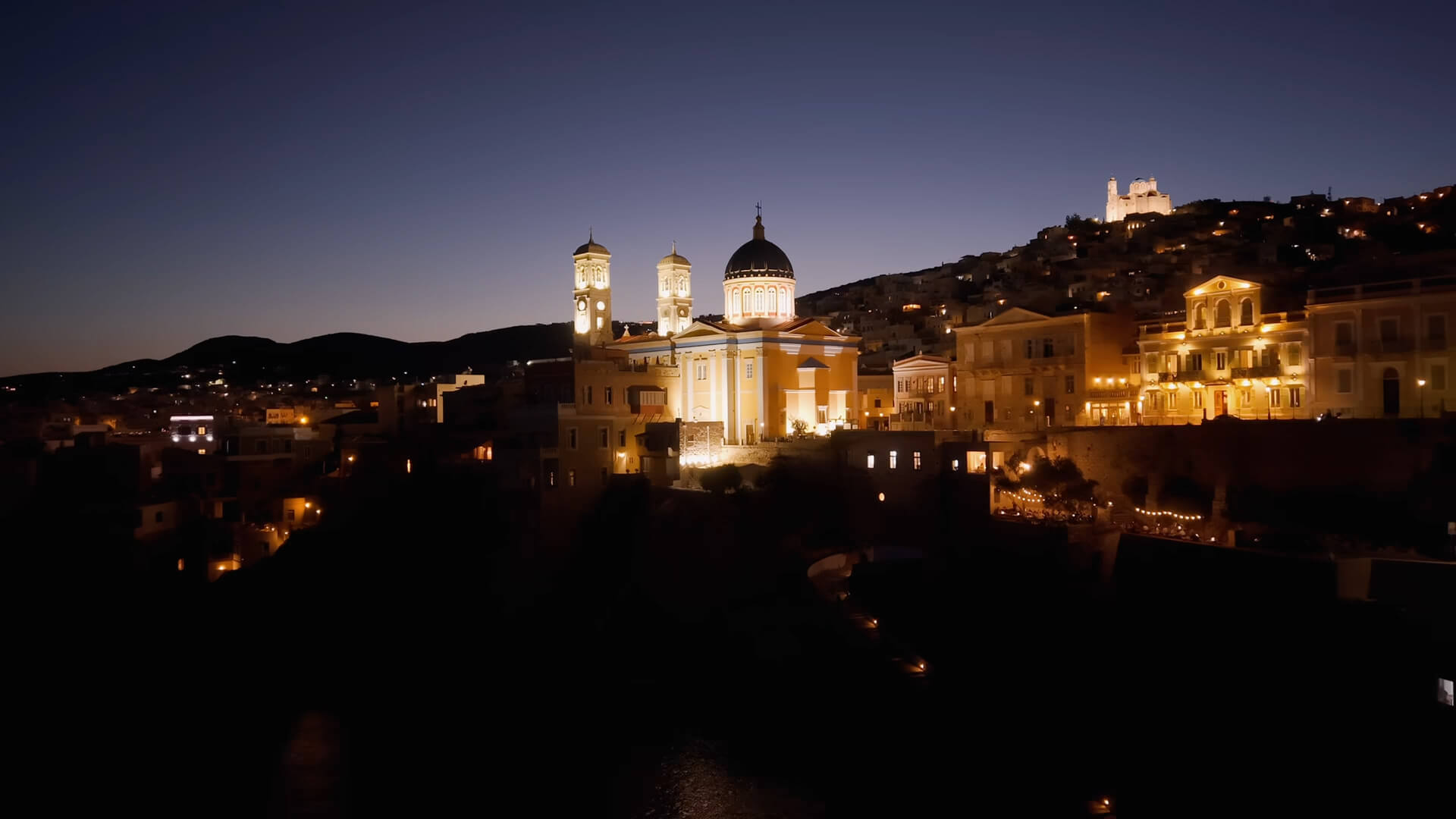
In October, the light over Hermoupolis changes. The harsh, bleaching white of the August sun softens into a warm, honey-colored glow that sets the neoclassical mansions on fire at sunset. For the locals, this is the signal to slow down.
The luxury of doing less becomes the island’s primary currency. You no longer have to navigate around crowds in Miaouli Square. You can walk down the center of the marble-paved streets, stopping to chat with a neighbor without the interruption of a passing tour group. The “language of the hands” becomes more deliberate—a potter takes longer with a vase, a baker spends more time perfecting the crust of a chalvadopita.
The Winter Swimmers of Vaporia
On most islands, the sea becomes a forbidden zone once the temperature drops. In Syros, the relationship with the water is a daily act that ignores the calendar.
After the season, the beach bars at Asteria might pack away their umbrellas, but the stone platforms remain. This is when the true “sea-warriors” of the island emerge. These are the winter swimmers who treat the Aegean as their private spa. To watch an eighty-year-old local dive into the crisp, October water is to understand the resilience of the Syriot soul. They don’t swim for sport; they swim because it is a habit that cleanses the spirit before the winter rains arrive.
The Return of the “Parea”
During the peak of summer, many locals retreat to the quieter parts of the island—the rugged hills of Apano Meria or the small farms in the interior. When the season ends, they return to the town centers.
The social table expands. In the winter, dining in Syros is an indoor sport. The tavernas fill with the scent of woodsmoke and slow-cooked stews. This is the time to eat San Michali cheese that has been aged to perfection over the summer months, or sausages seasoned heavily with wild fennel gathered from the hills.
Without the pressure of serving hundreds of tourists, the taverna owners sit with their guests. They pour a glass of local wine and tell stories of the island’s shipping glory days. In these moments, you realize that the food in Syros is not just about sustenance; it’s about the stories told while eating it.
Crafting in the Quiet
After the season, the artisan workshops of Syros hum with a different energy. In the summer, the “loukoumi” makers work at a fever pitch to keep up with demand. In the autumn, the pace becomes more artisanal.
The hands of the craftsmen remember the old ways when they aren’t rushed. A luthier in Ano Syros can spend an entire week tuning the body of a single bouzouki. A weaver can experiment with a new pattern on the loom, inspired by the winter colors of the Aegean. This is the time of year when the island’s “manual memory” is most active, preserving the heritage of the Cyclades away from the public eye.

The Ritual of the First Rain
The first rain in Syros is a celebrated event. After months of heat and dust, the water washes the marble streets of Hermoupolis until they shine like mirrors. The island turns green almost overnight.
The habit of seasonality shifts toward the earth. Locals head to the hills to forage for wild mushrooms and bitter greens (horta). There is a collective excitement for the “winter habits”—the roasting of chestnuts, the opening of the new wine barrels, and the preparation for the feast days that dot the winter calendar.
Why You Should Visit Syros After the Season
If you visit Syros when the “island is yours again,” you aren’t seeing a tourist destination; you are seeing a community. You get to witness the rituals that the locals usually keep for themselves.
- The Transparency: There are no “tourist menus.” You eat what the family eats.
- The Connection: Conversations last longer. People are curious about why you chose to visit when the sun isn’t scorching.
- The Peace: You can hear the sound of your own footsteps on the marble stairs of Ano Syros.
Final Thoughts
Syros is an island of layers. The summer layer is beautiful, vibrant, and loud. but the layer underneath—the one that reveals itself after the ferries stop being full—is the one that stays with you. It is an island of quiet habits, shared wine, and a sea that never truly says goodbye.
When the season ends, Syros doesn’t close. It simply opens its heart a little wider for those who are patient enough to stay.